For most home drinks, a 350 ml pitcher covers cups up to about 200 ml, and a 600 ml pitcher covers larger lattes. After steaming, the milk should fill the pitcher to roughly half to two-thirds full.
If the pitcher is nearly full before you start, the milk has no room to roll and will not texture properly. If it is nearly empty, the steam wand barely reaches below the surface and the milk overheats before it stretches.
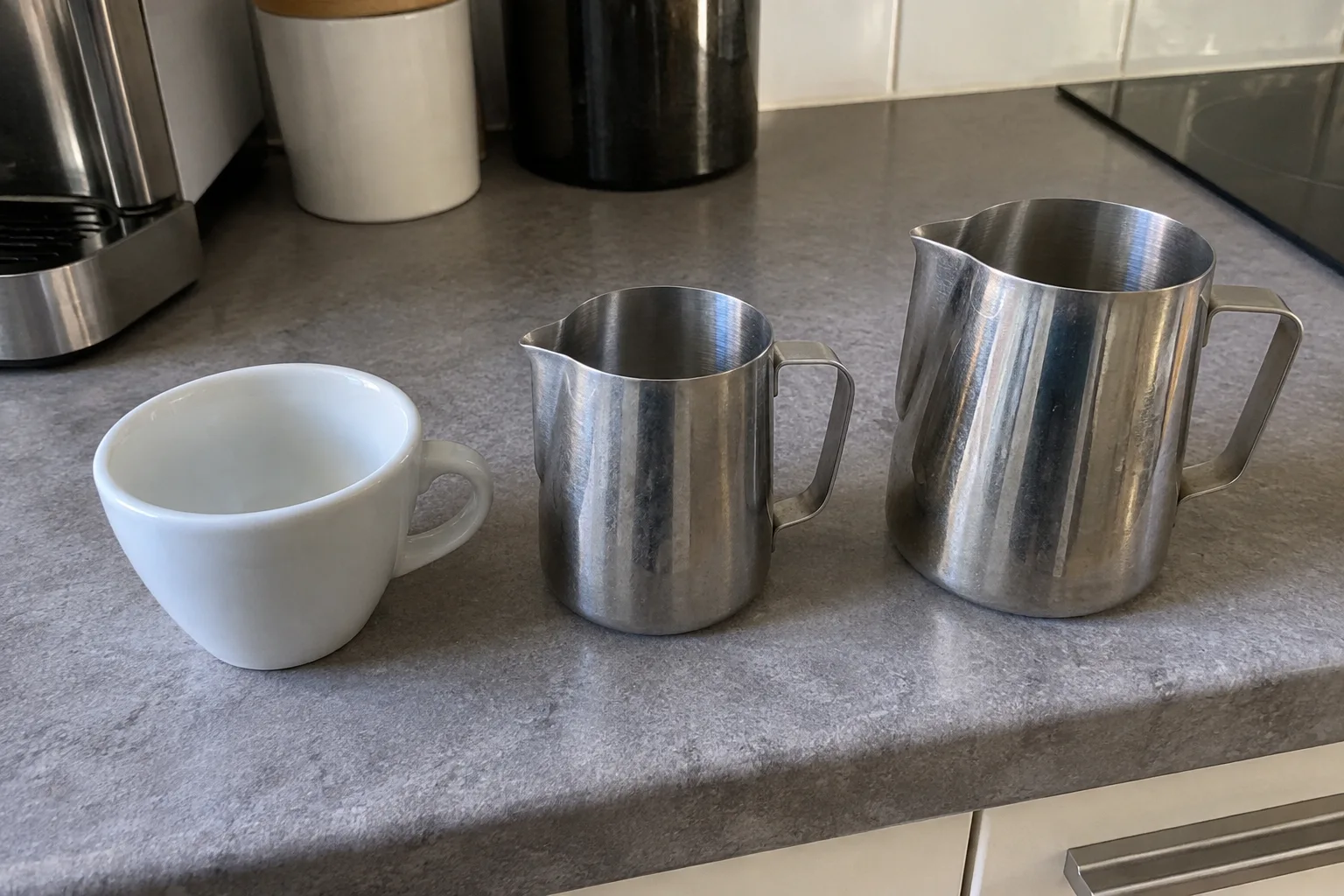
Why the fill level matters
Good microfoam needs a vortex. The whole body of milk has to circulate so the foam folds back in instead of sitting on top as a dry cap.
Circulation needs headroom. Milk expands as you stretch it, so a pitcher that starts two-thirds full of cold milk can end up at the rim. Fill to the bottom of the spout indentation at most, and below it for smaller drinks.
The other direction fails too. With 100 ml of milk in a 600 ml pitcher, the wand tip sits too deep, the milk never spins, and you get hot milk with a few bubbles on top.
How much milk a drink actually needs
These are starting quantities, measured in the pitcher before steaming:
| Drink | Typical cup | Cold milk to start |
|---|---|---|
| Cortado | 120–150 ml | 100–120 ml |
| Flat white | 150–180 ml | 130–160 ml |
| Cappuccino | 180–220 ml | 160–190 ml |
| Latte | 240–300 ml | 210–260 ml |
Expect a small amount of waste. Pouring the last drops throws off the flow, so steam slightly more than the cup needs rather than exactly filling it.
Match the pitcher to the cup
| Pitcher | Steams comfortably | Suits cups |
|---|---|---|
| 350 ml | 100–230 ml milk | 120–220 ml cups |
| 600 ml | 220–450 ml milk | 220–350 ml cups, or two small drinks |
A 350 ml pitcher also gives you better control for art in small cups. The spout is narrower relative to the flow, and the pitcher sits lower over the cup, which makes the close, low pour easier to judge. The small-cup guide goes into why that matters for flat whites and cortados.
Spout shape matters as much as size
A sharp, narrow spout draws finer lines; a rounded spout lays down softer, wider shapes. Neither is better, but switching spouts changes how your pours behave, so treat a new pitcher like a new variable and give it a few sessions before judging it.
Handle style and weight are personal. The fill level rule and the vortex are not. They decide whether the milk textures at all.
A one-pour test for a new pitcher
- Measure cold milk to just below the spout indent.
- Steam as usual and watch whether the surface rolls.
- If the milk spins and comes out glossy, the size works. If it sloshes or stays flat, adjust the volume, not your technique.
Log the combination that worked — pitcher, cup, milk volume — so you can repeat it without measuring every time. LatteArtist lets you save setup notes against each pour, which is handy when you own more than one pitcher.