Entry-level machines — the Breville Bambino, DeLonghi Dedica, Gaggia Classic and friends — can absolutely steam milk for latte art. They just do it slowly, and the standard café timing does not apply.
If your milk comes out hot but flat, or the foam is done before the milk is warm, the machine is asking for a different routine, not a replacement.
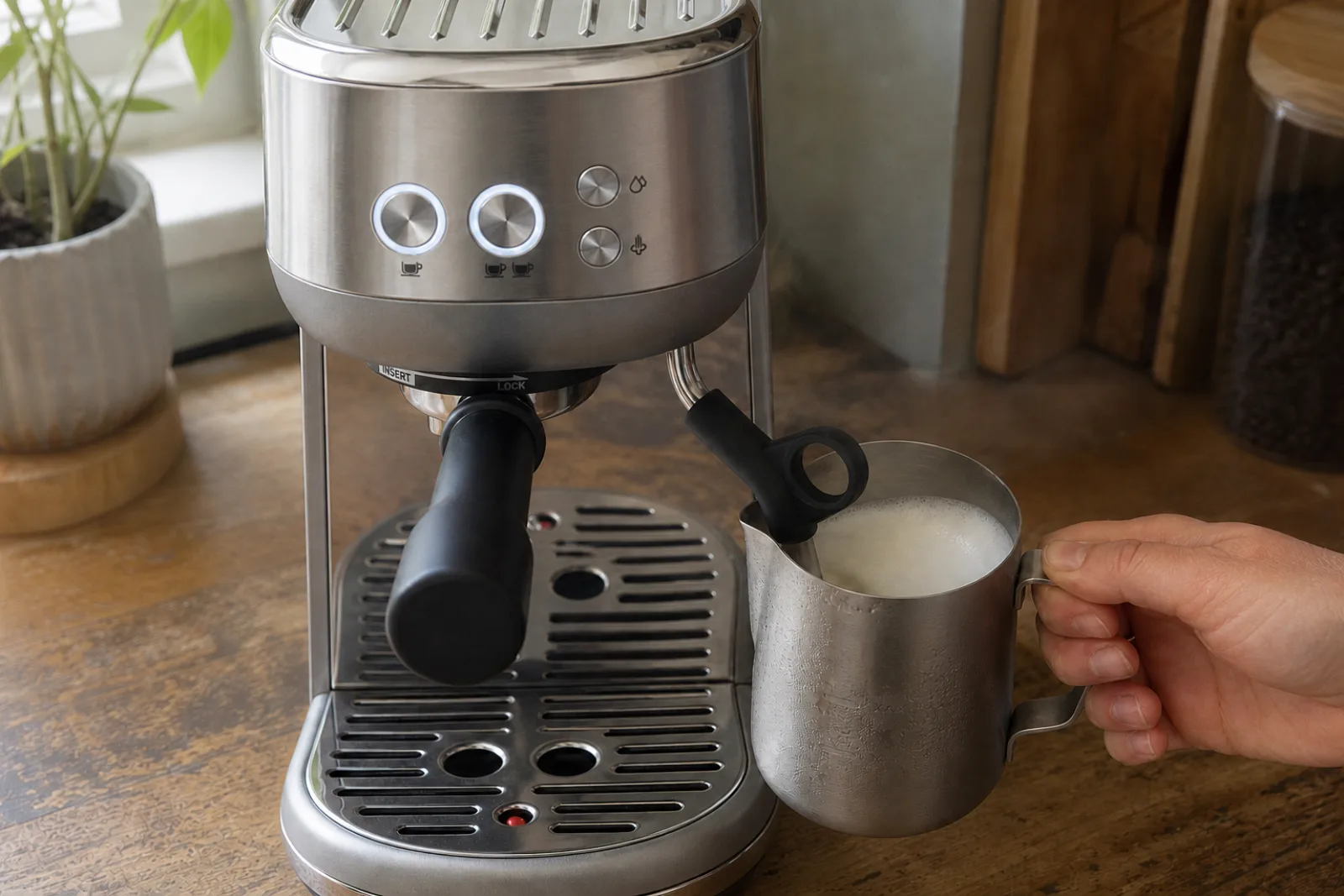
Why these machines feel different
Café machines have big boilers and dry, powerful steam. A full pitcher textures in a few seconds, so baristas talk about the stretch and the roll as quick phases.
Entry-level machines have small thermoblocks or small boilers. The steam pressure is lower and can sag partway through a pitcher. The same milk takes noticeably longer, which changes the technique:
- The stretch happens over more seconds, so it is easier to overshoot.
- The vortex is weaker, so position matters more.
- Steam can fade mid-pitcher, leaving you with warm, half-textured milk.
None of this prevents microfoam. It just means the window is longer and the setup has to be right.
Set the pitcher up for weak steam
- Use a small pitcher. A 350 ml pitcher with 120–150 ml of milk gives a small machine a fighting chance. A half-litre jug of cold milk will outlast the boiler.
- Start with cold milk and a cold pitcher. More time in the wand means more time to texture before the milk gets too hot.
- Purge the wand first. A few seconds of steam before the pitcher goes on clears the watery condensation that would otherwise water down the milk.
- Steam one drink at a time. Small machines recover between pitchers. Back-to-back steaming is where the steam sag shows up.
Find the vortex with a single-hole tip
Most entry-level machines ship with a single-hole tip. It is actually an advantage for beginners — one stream is easier to aim — but you have to place it deliberately:
- Tip just below the surface, slightly off-centre.
- Angle the pitcher a few degrees so the milk spins rather than sloshes.
- Listen: a gentle paper-tearing sound during the stretch, then a smooth hiss once the vortex takes over.
If the milk climbs the walls violently or big bubbles slap the surface, the tip is too high. If nothing moves, it is too deep. Small adjustments — millimetres, not centimetres.
Stretch longer, but less aggressively
With weak steam, the aeration phase stretches out. That is fine — but keep the total air the same as you would on a strong machine.
The mistake is compensating for slow steaming with a more aggressive tip position, which makes big bubbles faster than the weak vortex can break them down. Instead:
- Keep the tip position gentle and give it time.
- Watch the volume, not the clock: stop stretching when the milk has expanded by roughly a third.
- Then sink the tip slightly and spend the rest of the steam time rolling. On a small machine the roll is where microfoam is won.
If you cannot tell whether the result is too thick or too thin, the milk thickness guide has the diagnostic table. If a pour still goes wrong from there, the troubleshooting guide ties each symptom to one change.
Machine-specific notes
- Bambino / Bambino Plus: quick to heat, but the auto-froth modes on the Plus aim for cappuccino foam. Use manual control and watch the volume.
- Dedica: the stock panarello attachment makes big, dry foam. Many owners remove the outer sleeve and steam with the inner tube like a plain wand — check your manual before modifying anything.
- Gaggia Classic: decent steam for the price but a small boiler; expect pressure to fade on a large pitcher and keep drinks small.
A one-variable experiment
Next session, change only the pitcher: same milk, same machine, smaller pitcher with less milk. Compare the texture against your usual setup.
Weak machines reward small adjustments repeated over sessions. Log the machine, pitcher size, and what the milk looked like next to a photo of each pour — the practice routine shows a simple way to keep that record, and after a week you will know exactly what your machine likes.